I found an article several weeks ago by Wired.
It's Time for an RSS Revival
So I added an RSS widget to the blog (look at the sidebar). I've been quitting certain social networks due to disagreeing with their policies. So I figured I'd make it easier for people to keep up with the blog without having a social network subscription.
Showing posts with label Technology. Show all posts
Showing posts with label Technology. Show all posts
Saturday, September 1, 2018

Tuesday, August 7, 2018
Boldly Going (Where Everyone Else Has Gone Before)...
I think I've spoken enough for now regarding the rather dour subject of the failures of transhumanism as an ideological force for good. Instead, here's a post that might be a bit more fun (for everyone but me that is): computer programming!
It might surprise the two people who read this blog, but I've been trying to learn programming for almost a decade now and yet I still suck at it. Why? Well... I'm not sure exactly why (if I had to guess it's a combination of a bad study environment, impatience and difficulty committing to things).
I started out trying to learn Python 3 way back in 2009, then one of the chapters in the book I was using was difficult and I "rested" for a few days, which in turn became weeks, which in turn became the abandonment of my studies.
I tried learning it again several times but each time things got difficult I would "rest" for so long that I ended up quitting each study by fiat.
And this isn't limited to Python either. I've tried JavaScript, Swift, Ruby, Gambas, Perl, C, C++, C# and shell scripting with the same outcome.
Now I'm trying to learn programming again, so far I've been keeping at it but that's not saying much in regards to past performance.
The C language was influenced by B and BCPL, which was influenced by CPL. The C language in turn parented C++, C# and D. Maybe one day, far into the future, I'll learn programming through the latest offshoot of the C family:
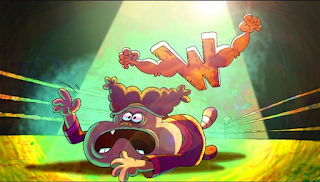
I'm (obviously) the one on the bottom.
It might surprise the two people who read this blog, but I've been trying to learn programming for almost a decade now and yet I still suck at it. Why? Well... I'm not sure exactly why (if I had to guess it's a combination of a bad study environment, impatience and difficulty committing to things).
I started out trying to learn Python 3 way back in 2009, then one of the chapters in the book I was using was difficult and I "rested" for a few days, which in turn became weeks, which in turn became the abandonment of my studies.
I tried learning it again several times but each time things got difficult I would "rest" for so long that I ended up quitting each study by fiat.
And this isn't limited to Python either. I've tried JavaScript, Swift, Ruby, Gambas, Perl, C, C++, C# and shell scripting with the same outcome.
Now I'm trying to learn programming again, so far I've been keeping at it but that's not saying much in regards to past performance.
The C language was influenced by B and BCPL, which was influenced by CPL. The C language in turn parented C++, C# and D. Maybe one day, far into the future, I'll learn programming through the latest offshoot of the C family:

I'm (obviously) the one on the bottom.
Monday, July 30, 2018
Exit Planet Transhuman?

Perhaps some of the readers here have heard of the death of John Perry Barlow. If the name doesn't ring a bell, he wrote something called "A Declaration of the Independence of Cyberspace", the Libertarian manifesto that lead to the currents in modern day Silicon Valley of "disruption" and "move fast and break things". You know, stuff that "disrupted" people's privacy and "broke" civil discourse.
One of the most incredible things about this man though is that he believed in the techno-libertarian dream to the end of his life, even as it ravaged the very medium he had fawned over.
A recent Verge article quoted the Electronic Frontier Foundation staff member Cindy Cohn: "Barlow knew that new technology could create and empower evil as much as it could create and empower good. He made a conscious decision to focus on the latter.”
"Focus on the latter", think about that prase. It's a rather vague phrase but I get the feeling from it that Barlow had decided to shut out the very thought that the web could be used for evil, or at the very least stubbornly refused to rethink his ideology as it came crashing down upon the world.
There's a word for that: willful ignorance. And it seems that some of the big-hitters of the transhumanist movement continue that legacy of willful ignorance.
An older article by Vice gives a look into the thought processes of a well known transhumanist named Zoltan Istvan. A member of a group of transhumanists floated the possibility of inequality persisting into the future.
Most of the members of the group agreed with her, but Zoltan's response was: 'The good news is that we don't have the robber barons of the 20th century ... We don't have child labor and stuff like that in America anymore, we have a lot of better rules, and I know it's not perfect but it's very hard for the Bill Gates or the Mark Zuckerberg to do anything that is so against the people ... There's no question that within the next three to five years something like the Transhumanist Bill of Rights is going to enter into the United Nations Declaration of Human Rights," he said. He did not think that government or corporations would play a role'.
There's a major bit of handwaving here: "He did not think that government or corporations would play a role". It doesn't seem to occur to him that the lack of modern robber barons and child labor (in the U.S. at least) resulted from government action, not in spite of it.
In fact he seems to ignore the fact that "the government" is employed by groups of individual people in representative democracies. Yes, there are loopholes and wealth inequality itself that small groups can take advantage of to sway democratic governments, but the heart of the idea is still sound (as evidenced -again- by the lack of robber barons and child laborers in the modern U.S.). No man is an island.
But this thought that "if we just throw more technology at everything and ignore pesky things like politics and social sciences then everything will be okay!" strikes me as a big damn problem in the transhumanist movement.
So maybe it's time to leave transhumanism behind.
It was an interesting prototype, but it's time to make something that factors in a broader view of the world and people (big hint: nobody -and this applies to Libertarians too- are ultra-rational in unregulated capitalism).
We can't stay in this cradle called transhumanism forever.
Friday, July 20, 2018
The Borg Browser
The web browsers have been assimilated, the resistance was futile.
In the closing years of the 2000s Opera and Firefox in particular had a number of built in tools and features and were fast and easy to customize.
But something seems to have happened in the intervening years between then and now.
Perhaps the best way to illustrate what's happened is to compare and contrast older versions of these browsers and the new ones.
Firefox's settings in v. 4:

in v. 6x:

Opera has suffered a similar neutering too. Here's the old version (via allaboutcookies.org), compare that to the new and "improved" version.
Of course things under the hood have changed too. Opera switched to the Blink layout engine which is also used in Chrome. Firefox still uses its own layout engine, but it's incorporated the Pocket service and tracks you. Yes you can opt out of the tracking, but only in a very unintuitive way. Mon Dieu! Firefox has jumped onto the tracking bandwagon!? Say it ain't so!
But why have browsers done this? I think there's an answer: these browsers are trying to be more like Google Chrome.
Yes, it seems like the makers of Opera and Firefox have decided that everyone wants browsers to be like Chrome. It's not like people who want to use Chrome will use it while people who don't want to use Chrome would stick to non-Chrome browsers. No, that would be too sane.
So there you have it, Google Chrome is the Borg of the web browser world and Opera and Firefox have been assimilated by it.

In the closing years of the 2000s Opera and Firefox in particular had a number of built in tools and features and were fast and easy to customize.
But something seems to have happened in the intervening years between then and now.
Perhaps the best way to illustrate what's happened is to compare and contrast older versions of these browsers and the new ones.
Firefox's settings in v. 4:

in v. 6x:

Opera has suffered a similar neutering too. Here's the old version (via allaboutcookies.org), compare that to the new and "improved" version.
Of course things under the hood have changed too. Opera switched to the Blink layout engine which is also used in Chrome. Firefox still uses its own layout engine, but it's incorporated the Pocket service and tracks you. Yes you can opt out of the tracking, but only in a very unintuitive way. Mon Dieu! Firefox has jumped onto the tracking bandwagon!? Say it ain't so!
But why have browsers done this? I think there's an answer: these browsers are trying to be more like Google Chrome.
Yes, it seems like the makers of Opera and Firefox have decided that everyone wants browsers to be like Chrome. It's not like people who want to use Chrome will use it while people who don't want to use Chrome would stick to non-Chrome browsers. No, that would be too sane.
So there you have it, Google Chrome is the Borg of the web browser world and Opera and Firefox have been assimilated by it.

Sunday, May 6, 2018
A shot in the dark
The digital age has bloomed, and it's a nightmare.
Okay that's probably too melodramatic, but you have to admit that the digital revolution that promised a bright and closely connected future for all of humanity has fallen far short of said promise.
I'm not going to go over the whole bots, cyberwarfare and swatting stuff, many people speak about it better than I ever could. No, what I'm going to talk about is free speech and the new circumstances the digital age has wrought upon it.
Before I continue, I want to bring to your attention to an article written by Zeynep Tufekci at Wired. It's an interesting article detailing how censorship is no longer the sole purview of governments or large corporations and what that implies for the digital age.
If you are unable to read the whole story then at least take this quote to heart:
Thus the new age of censorship, but what of free speech itself?
At the risk of being U.S.-centric (I don't think I have the liberty to talk about other nations), let's go back to the late 18th century U.S. As the Constitution was formed one of the major ideas codified by it was the idea of the freedom of peaceful expression. You could argue against or in favor of an idea or event and -provided you did so peacefully- you wouldn't be arrested or silenced by the U.S. government.
We all know the world was different back then. But let's think for a moment about how different it really was and what those differences meant for the very concept of freedom of expression (including the freedom of speech).
This was an age in which news only traveled as fast as a horse could gallop, a world where electricity -much less communications based on it- was yet to be harnessed, an age where the scope of globalization was limited by sail, carriage and foot.
What did all of this imply for the idea of free expression? It meant nobody, not even the greatest thinkers of the time, could imagine near-instantaneous communication to audiences of millions across a continent, much less the entire world. Nobody could have imagined that wealthy reactionaries could buy up large portions of the fourth-estate known as the press and control it from halfway around the planet. And certainly nobody could have conceived of sockpuppet accounts, weaponized personality profiling or web-bots that a small group of people in Macedonia could use to warp the zeitgeist of an entire country across the Atlantic.
But all of that is possible today thanks to the power of the World Wide Web, and as a result it's changed the context of free expression. Before, it was believed that one person could contribute one voice to the chorus of human rhetoric and only one voice. But with sockpuppets and web-bots it's now possible for a single person to amplify their voice to shout over all objections and concerns.
In other words: free expression today means all expression is free, but some freedom is freer than others -especially if dishonest means are used. And all of this is having a deleterious effect on civilization.
Of course pointing out a problem is easy but it's much harder to come up with solutions for it. It would require action via massive cross-disciplinary research and implementation.
Unfortunately I am just one person in a sea of 7 billion and counting.
Okay that's probably too melodramatic, but you have to admit that the digital revolution that promised a bright and closely connected future for all of humanity has fallen far short of said promise.
I'm not going to go over the whole bots, cyberwarfare and swatting stuff, many people speak about it better than I ever could. No, what I'm going to talk about is free speech and the new circumstances the digital age has wrought upon it.
Before I continue, I want to bring to your attention to an article written by Zeynep Tufekci at Wired. It's an interesting article detailing how censorship is no longer the sole purview of governments or large corporations and what that implies for the digital age.
If you are unable to read the whole story then at least take this quote to heart:
"The most effective forms of censorship today involve meddling with trust and attention, not muzzling speech itself. As a result, they don’t look much like the old forms of censorship at all."
Thus the new age of censorship, but what of free speech itself?
At the risk of being U.S.-centric (I don't think I have the liberty to talk about other nations), let's go back to the late 18th century U.S. As the Constitution was formed one of the major ideas codified by it was the idea of the freedom of peaceful expression. You could argue against or in favor of an idea or event and -provided you did so peacefully- you wouldn't be arrested or silenced by the U.S. government.
We all know the world was different back then. But let's think for a moment about how different it really was and what those differences meant for the very concept of freedom of expression (including the freedom of speech).
This was an age in which news only traveled as fast as a horse could gallop, a world where electricity -much less communications based on it- was yet to be harnessed, an age where the scope of globalization was limited by sail, carriage and foot.
What did all of this imply for the idea of free expression? It meant nobody, not even the greatest thinkers of the time, could imagine near-instantaneous communication to audiences of millions across a continent, much less the entire world. Nobody could have imagined that wealthy reactionaries could buy up large portions of the fourth-estate known as the press and control it from halfway around the planet. And certainly nobody could have conceived of sockpuppet accounts, weaponized personality profiling or web-bots that a small group of people in Macedonia could use to warp the zeitgeist of an entire country across the Atlantic.
But all of that is possible today thanks to the power of the World Wide Web, and as a result it's changed the context of free expression. Before, it was believed that one person could contribute one voice to the chorus of human rhetoric and only one voice. But with sockpuppets and web-bots it's now possible for a single person to amplify their voice to shout over all objections and concerns.
In other words: free expression today means all expression is free, but some freedom is freer than others -especially if dishonest means are used. And all of this is having a deleterious effect on civilization.
Of course pointing out a problem is easy but it's much harder to come up with solutions for it. It would require action via massive cross-disciplinary research and implementation.
Unfortunately I am just one person in a sea of 7 billion and counting.
Subscribe to:
Posts (Atom)